How Does a Solar Security Camera Work Without Electricity?
magine you need to monitor a farm entrance, construction site, warehouse perimeter, parking area or remote property - but there is no convenient electrical connection nearby.
Does that mean you cannot install a security camera?
Not anymore.
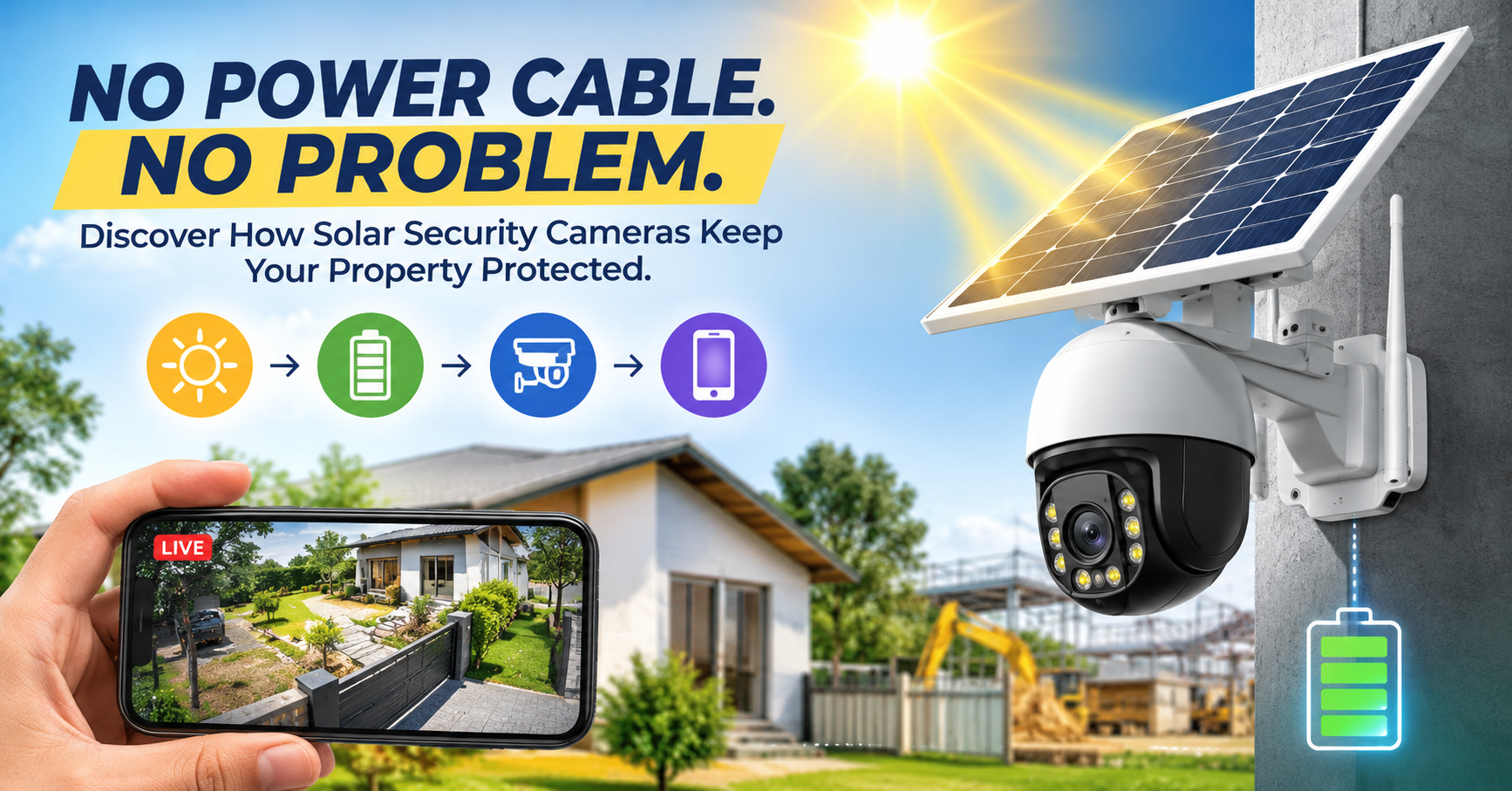
A solar security camera can provide surveillance without depending on a traditional grid-power connection. Instead of connecting the camera to an electrical outlet, the system uses a solar panel to convert sunlight into electricity. That energy is stored in a rechargeable battery and used to operate the camera when sunlight is unavailable.
Depending on the model, the camera can communicate through Wi-Fi or a mobile network such as 4G, allowing users to receive alerts and access footage remotely.
So, how exactly does it work?
Let's break it down.
What Is a Solar Security Camera?
A solar security camera is a surveillance camera designed to operate using solar energy rather than a conventional mains electricity connection.
A typical system combines several important components:
-
Solar panel
-
Rechargeable battery
-
Camera and image sensor
-
Charge controller/power-management system
-
Motion detection sensor
-
Wireless connectivity
-
Local or cloud storage, depending on the model
The solar panel generates electricity during daylight hours. The battery stores that energy, and the camera uses the stored power whenever required.
This makes solar cameras particularly useful in places where installing electrical cables is difficult, expensive or impractical.
How Does a Solar Security Camera Work?
The easiest way to understand the technology is to think of it as a simple cycle:
Sunlight → Solar Panel → Battery → Camera → Recording/Alerts
Here is what happens at each stage.
Step 1: The Solar Panel Captures Sunlight
The process starts with the solar panel.
Solar panels contain photovoltaic cells that convert sunlight into electrical energy. During daylight, the panel generates electricity that can be used to recharge the camera's battery.
The amount of energy generated depends on factors such as:
-
Available sunlight
-
Panel size and efficiency
-
Panel positioning
-
Weather conditions
-
Shading
-
Installation location
This is why proper solar-panel placement is important when installing a solar powered CCTV camera.
Step 2: Solar Energy Charges the Battery
The electricity generated by the solar panel is used to charge a rechargeable battery.
A power-management or charge-control system helps regulate the charging process and protects the battery from unsuitable charging conditions.
The battery is one of the most important parts of the system because the camera does not need direct sunlight every moment that it is operating.
Think of the solar panel as the system's energy generator and the battery as its energy storage tank.
During the day:
Sunlight → Solar Panel → Battery
At night:
Battery → Camera
This stored energy allows the camera to continue operating after the sun goes down.
Step 3: The Battery Powers the Camera
Once the battery has stored energy, it can power the camera even when there is no sunlight.
This is particularly important during:
-
Night-time
-
Early morning
-
Cloudy periods
-
Temporary reductions in sunlight
The actual runtime depends on the camera's battery capacity, power consumption, solar-panel output, weather conditions and how frequently the camera is activated.
Therefore, it is better to avoid the claim that every solar camera will run indefinitely under all weather conditions. A properly designed system needs sufficient solar generation and battery capacity for its environment.
Step 4: Motion Detection Helps Save Battery Power
One of the smartest features of many wireless solar cameras is motion detection.
Instead of continuously operating every component at maximum power, some models use a low-power standby mode and activate recording when motion is detected.
For example:
No movement → Low-power standby
Movement detected → Camera wakes up
Recording → Video captured
Alert → Notification sent
Event completed → Camera returns to low-power mode
PIR sensors are commonly used for detecting movement based on infrared radiation from warm objects such as people and animals.
This type of power management can significantly help solar cameras conserve stored battery energy.
Step 5: The Camera Records and Sends Footage
Once the camera detects activity, it can record video according to its configuration.
Depending on the model, footage may be:
-
Stored on a microSD card
-
Stored on local storage
-
Uploaded to cloud storage
-
Viewed remotely through a mobile application
Connectivity varies between products.
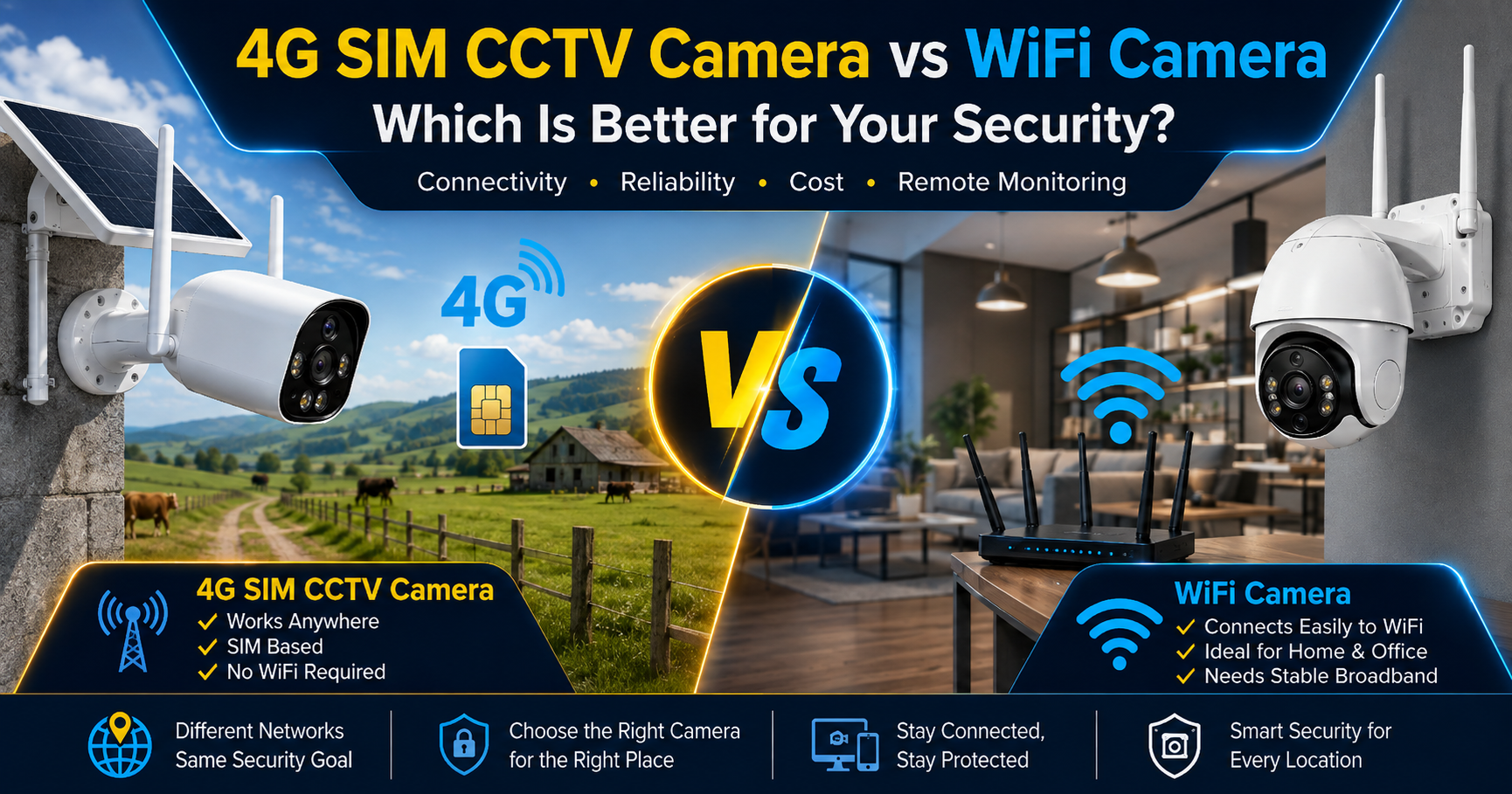
A Wi-Fi solar security camera uses an available Wi-Fi network.
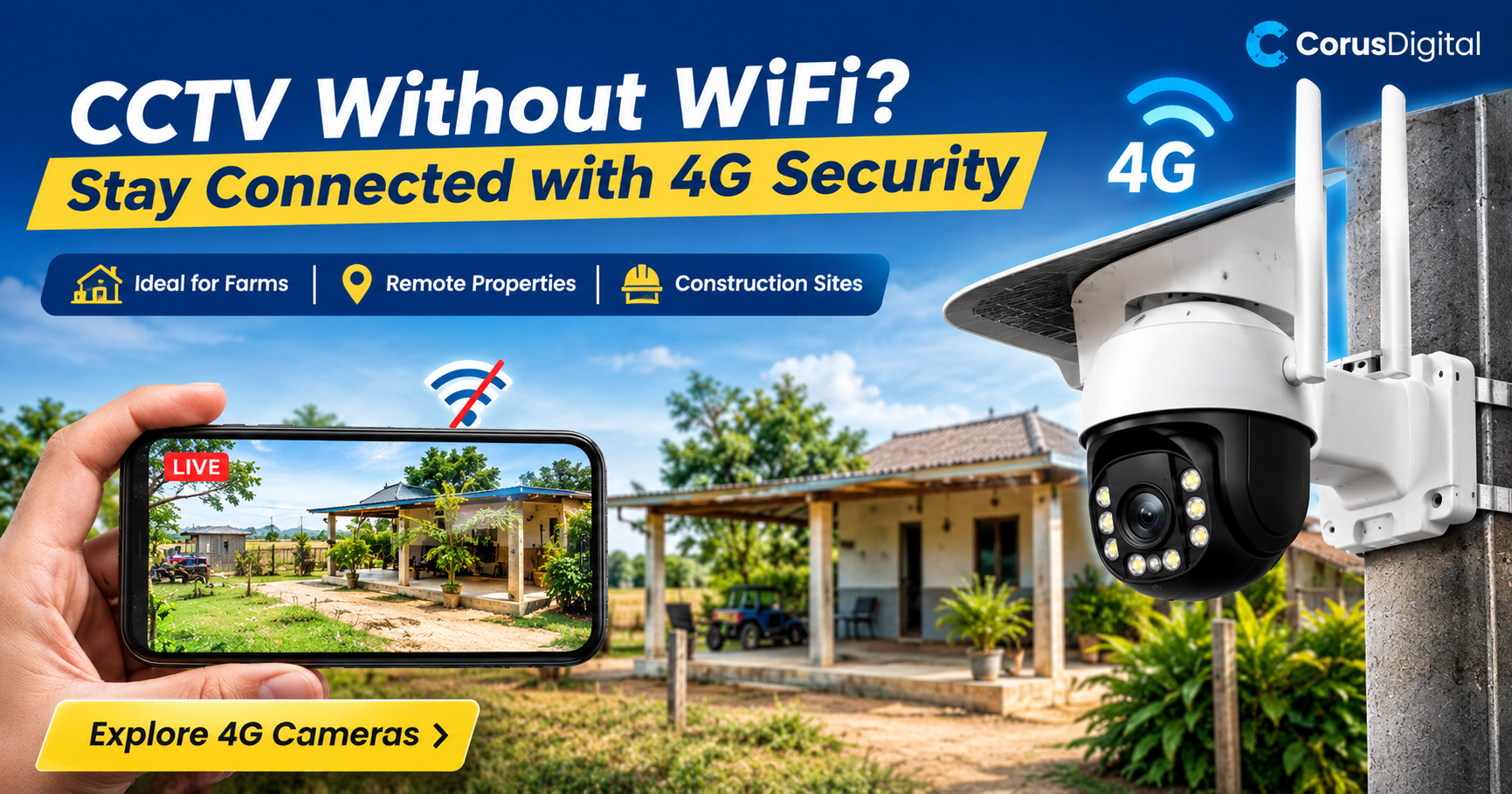
A 4G solar security camera can use a SIM card and mobile network, making it more suitable for locations where Wi-Fi infrastructure is unavailable but cellular coverage exists.
What Happens to a Solar Security Camera at Night?
This is one of the most common questions about solar surveillance cameras.
The answer is simple:
The battery takes over.
During daylight hours, the solar panel generates electricity and replenishes the battery.
When the sun goes down, the camera uses the energy stored in the battery.
So the operating cycle looks like this:
Day
☀️ Sunlight
↓
🔋 Solar panel generates electricity
↓
🔋 Battery charges
↓
📷 Camera operates
Night
🌙 No sunlight
↓
🔋 Battery supplies stored energy
↓
📷 Camera continues monitoring
This is why the battery capacity and solar-panel performance are both important when selecting a solar powered CCTV camera.
Can a Solar Security Camera Work on Cloudy or Rainy Days?
Yes, a solar security camera can continue operating during cloudy conditions, because it does not necessarily need direct sunlight at every moment.
However, there is an important distinction.
The camera can operate using stored battery energy, but the solar panel's ability to recharge that battery depends on available light.
Several cloudy days can therefore reduce the amount of energy being replenished.
Performance depends on:
-
Solar-panel capacity
-
Battery capacity
-
Amount of available sunlight
-
Camera power consumption
-
Frequency of motion events
-
Connectivity usage
-
Installation angle and shading
A good installation should therefore account for local sunlight conditions rather than assuming that the camera will receive maximum solar generation every day.
How Does a Wireless Solar Camera Connect to the Internet?
Solar power solves the electricity problem, but it does not automatically solve the internet connection problem.
There are two common approaches.
Wi-Fi Solar Security Camera
A Wi-Fi model connects to an existing wireless network.
This can be suitable for:
-
Homes
-
Shops
-
Offices
-
Villas
-
Buildings
-
Properties where Wi-Fi already reaches the camera location
The advantage is that there is no need to run a separate network cable to the camera.
However, the camera still needs a suitable Wi-Fi connection for remote network-based functions.
4G Solar Security Camera
A 4G model uses a compatible SIM card and mobile network rather than depending on a local Wi-Fi router.
This can be especially useful for:
-
Farms
-
Construction sites
-
Remote gates
-
Agricultural land
-
Large open areas
-
Temporary sites
-
Locations without fixed internet infrastructure
A 4G solar camera combines two important technologies:
Solar power = no conventional power connection
4G connectivity = no fixed internet connection
That combination makes it possible to deploy surveillance in locations where traditional CCTV installation would be difficult.
What Are the Main Components of a Solar CCTV Camera?
A solar-powered surveillance system generally consists of several key components.
1. Solar Panel
Captures sunlight and generates electrical energy.
2. Rechargeable Battery
Stores energy for use when the solar panel is not generating enough power.
3. Camera
Captures images and video of the monitored area.
4. Motion Sensor
Detects movement and can trigger recording or alerts.
5. Power Management System
Controls how energy flows between the solar panel, battery and camera.
6. Connectivity Module
Provides Wi-Fi or cellular connectivity depending on the camera.
7. Storage
Depending on the product, video may be saved locally or remotely.
The exact hardware and specifications vary by camera model, so buyers should always check the manufacturer's specifications before installation.
Where Can Solar Security Cameras Be Used?
One of the biggest advantages of solar surveillance is installation flexibility.
A solar security camera can be considered for locations such as:
Homes
Monitor gates, driveways, gardens, terraces and property boundaries.
Farms and Agricultural Land
Monitor entrances, equipment, livestock areas and remote sections of a property.
Construction Sites
Monitor construction materials, machinery, entrances and activity outside working hours.
Warehouses and Industrial Areas
Monitor outdoor storage areas, loading zones and perimeter locations.
Parking Areas
Monitor vehicles and access points where running power cables may be difficult.
Remote Properties
Provide surveillance where grid electricity or network infrastructure is unavailable.
Temporary Locations
Solar cameras can be useful when permanent cabling is not practical or when surveillance is required for a limited period.
Benefits of Solar Powered CCTV Cameras
1. Reduced Dependence on Grid Electricity
The camera can generate and store its own energy, reducing dependence on a conventional power connection.
2. Easier Installation
Without the need to run a dedicated power cable to the camera, installation can be simpler in suitable locations.
3. Useful for Remote Areas
Solar cameras can provide surveillance in locations where conventional electrical infrastructure is limited.
4. Continued Operation During Power Cuts
Because the camera can draw from its battery, a grid power outage does not automatically mean the camera stops working.
5. Flexible Placement
The absence of a power cable can give installers greater flexibility when choosing a suitable camera position.
6. Wireless Connectivity Options
Depending on the model, users can choose Wi-Fi or cellular connectivity.
7. Potentially Lower Installation Infrastructure
For suitable applications, avoiding long power cable runs can reduce some of the infrastructure associated with conventional CCTV installation.
Things to Consider Before Installing a Solar Security Camera
Solar technology is powerful, but choosing the right system requires more than simply looking at the word "solar."
Check Solar Exposure
The panel should have a suitable view of the sky and receive adequate sunlight.
Check Battery Capacity
A larger battery can provide greater energy storage, but the appropriate capacity depends on the camera and application.
Consider Camera Usage
A camera with frequent motion events or extended live viewing can consume more energy than one operating primarily in standby and recording occasional events.
Choose the Right Connectivity
If Wi-Fi is available, a Wi-Fi solar camera may be appropriate.
For remote locations without Wi-Fi, consider a 4G model if cellular coverage is suitable.
Consider Weather Protection
For outdoor installations, check the camera's weather-resistance rating and ensure the installation is appropriate for the environment.
Think About Night Vision
If the area needs monitoring after dark, check the camera's night-vision capability.
Check Storage Options
Understand whether the camera supports SD-card storage, cloud storage, or both.
Solar Security Camera vs Traditional CCTV Camera
|
Feature |
Solar Security Camera |
Traditional Wired CCTV |
|
Main power source |
Solar + battery |
Grid/electrical power |
|
Power cable |
Often not required |
Usually required |
|
Network |
Wi-Fi/4G, depending on model |
Ethernet/Wi-Fi, depending on system |
|
Remote locations |
Excellent for suitable sites |
More difficult if infrastructure is absent |
|
Installation flexibility |
High |
Depends on cabling |
|
Power outage resilience |
Battery can provide backup |
Depends on backup power/UPS |
|
Best suited for |
Remote/outdoor/off-grid locations |
Buildings and locations with existing infrastructure |
The important point is that neither technology is universally better.
A traditional wired CCTV system may be ideal for a building with reliable electrical and network infrastructure. A solar security camera can be much more practical when running cables is difficult.
Insights
A solar security camera doesn't magically create electricity from nothing. Instead, it uses a simple but effective combination of solar generation, battery storage, smart power management and surveillance technology.
During the day, the solar panel captures sunlight and helps charge the battery. The battery then provides energy to the camera when sunlight is unavailable. Motion detection can help reduce unnecessary power consumption, while Wi-Fi or 4G connectivity can provide remote access depending on the camera model.
This makes solar-powered CCTV particularly useful for farms, construction sites, gates, warehouses, parking areas, homes and other locations where running electrical cables may be difficult.
If you're looking for a surveillance solution that provides greater installation flexibility without depending on a conventional power connection, a solar security camera may be worth considering.
For CCTV and security solutions, readers can explore Corus Digital.
Frequently Asked Questions
Does a solar security camera work without electricity?
It works without a conventional grid-power connection. The camera generates electricity from sunlight and stores it in a rechargeable battery. The battery then powers the camera when solar generation is unavailable.
Does a solar camera work at night?
Yes. The rechargeable battery stores energy generated during daylight, allowing the camera to operate after sunset.
Does a solar CCTV camera need Wi-Fi?
Not necessarily. Some models use Wi-Fi, while 4G solar security cameras can use a mobile network with a compatible SIM card.
Will a solar camera work during a power cut?
A solar camera with a charged battery can continue operating because it is not dependent on mains electricity at the camera location.
Can solar security cameras work on cloudy days?
They can continue operating from stored battery energy. However, cloudy weather can reduce solar charging, so system design and battery capacity are important.
Are solar security cameras suitable for farms?
Yes. Their ability to operate without a conventional power connection makes them particularly useful for suitable remote agricultural and farm locations.
Is a solar camera completely maintenance-free?
Not necessarily. The solar panel should remain reasonably clean and unobstructed, and the battery, connectivity and camera should be checked periodically.