Best CCTV Camera for Remote Areas Without WiFi
Security should not depend on whether a property has a WiFi connection.
Farmhouses, agricultural land, construction sites, warehouses, parking areas, remote shops and vacant properties may not have reliable broadband or WiFi. However, these locations can still require continuous monitoring.
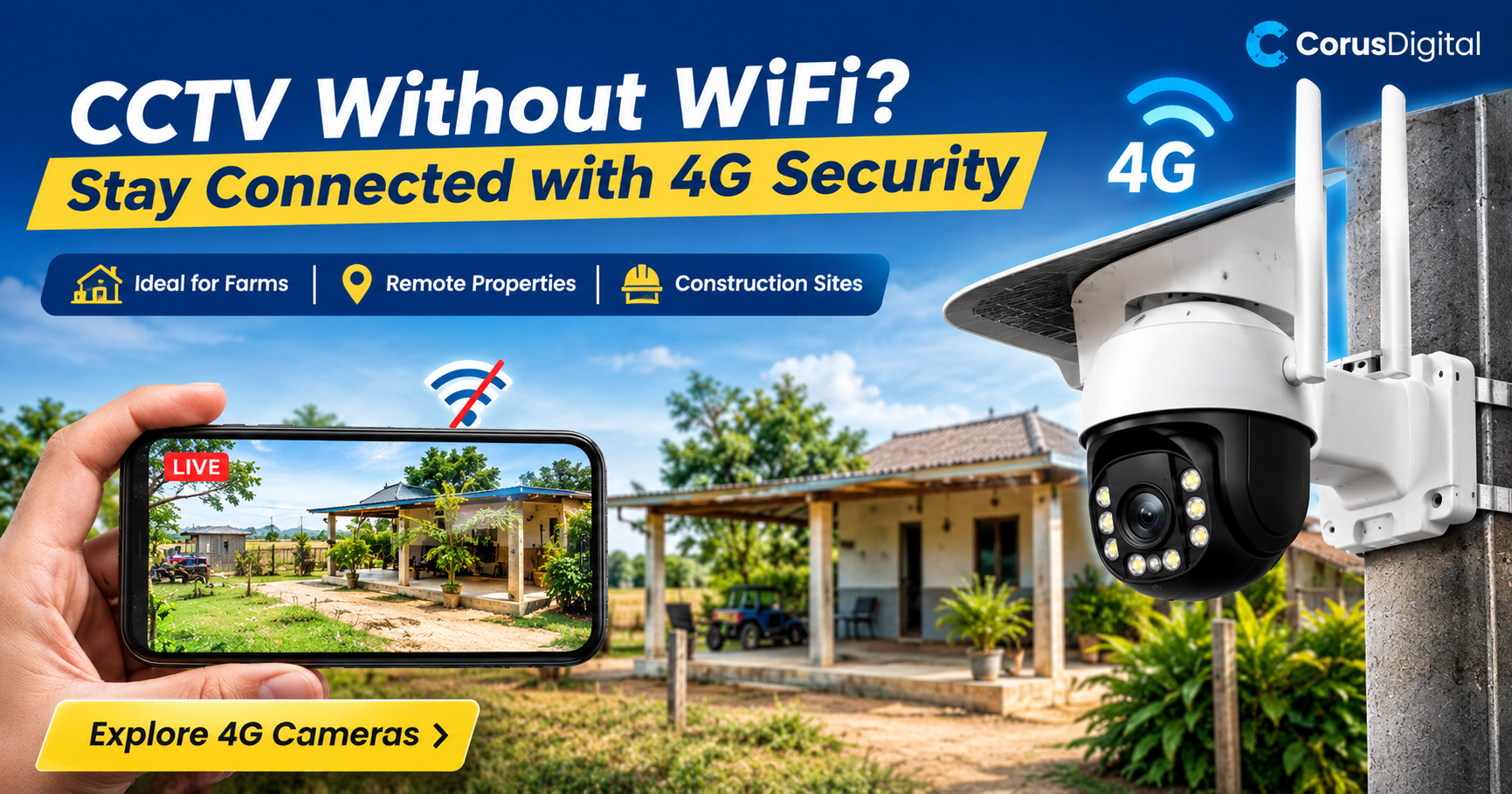
This is where a 4G CCTV camera without WiFi can be a practical solution.
Instead of connecting to a WiFi router, a 4G camera uses a compatible SIM card and mobile network to transmit video and alerts. This makes it possible to monitor locations where installing broadband or a traditional network connection may be difficult.
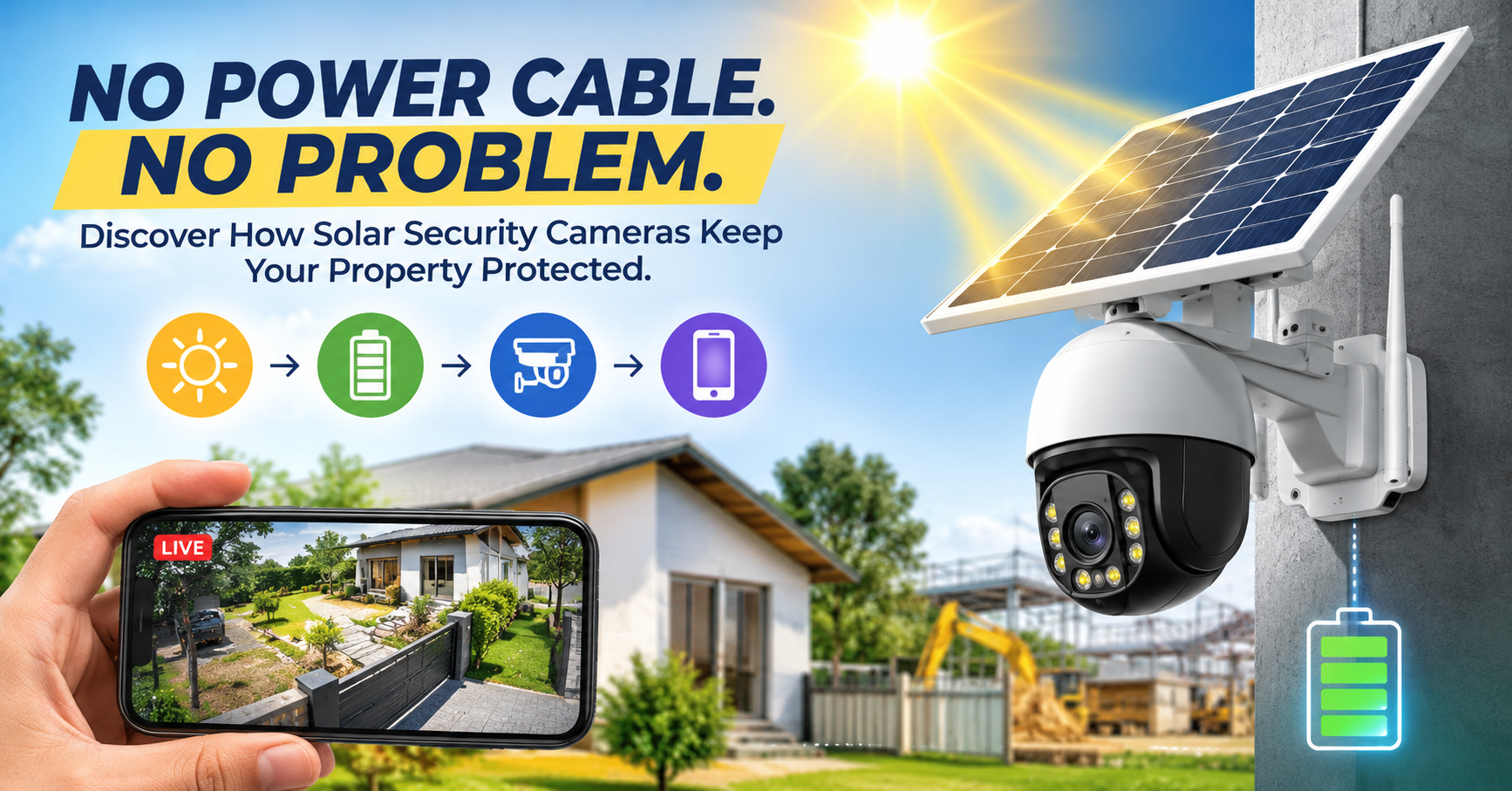
CorusDigital's website currently features a dedicated 4G Cameras category alongside solar-powered surveillance cameras, making this type of security solution particularly relevant for remote-location monitoring.
What Is a CCTV Camera Without WiFi?
A CCTV camera without WiFi does not necessarily mean that the camera works without any internet connection.
Instead, a 4G SIM CCTV camera connects to the internet through a mobile cellular network rather than a WiFi router.
The basic setup works like this:
Camera → 4G SIM → Mobile Network → Internet → Mobile App
The camera captures video and uses mobile data to send footage or alerts to the user's smartphone.
This means you don't necessarily need:
-
WiFi router
-
Broadband connection
-
Ethernet cable running to the camera
-
Fixed internet connection
You generally need a compatible camera, an active SIM/data plan, adequate cellular signal and a suitable power source.
Why Choose a 4G CCTV Camera for Remote Areas?
Traditional WiFi CCTV cameras are excellent when reliable WiFi is already available.
But remote properties can present a different challenge.
Imagine a farmhouse several kilometres away from the city.
Installing broadband could involve:
-
New wiring
-
Router installation
-
Infrastructure availability
-
Additional monthly costs
-
Maintenance
A 4G CCTV camera can simplify the connectivity side because it communicates through a mobile network.
1. No WiFi Router Required
The biggest advantage is simple:
No WiFi router is required for the camera's cellular connection.
The camera uses its SIM/mobile network connection instead.
2. Suitable for Remote Properties
4G cameras can be useful for locations such as:
-
Farmhouses
-
Agricultural land
-
Construction sites
-
Warehouses
-
Open plots
-
Remote shops
-
Parking areas
-
Vacation homes
-
Storage areas
-
Industrial locations
Similar applications are commonly associated with SIM-based CCTV because these locations may not have fixed internet access.
3. Remote Monitoring From Your Phone
One of the biggest reasons people choose a 4G camera is remote access.
Depending on the camera and app ecosystem, users can potentially:
-
View live footage
-
Receive motion alerts
-
Review recorded footage
-
Monitor the property remotely
-
Use two-way communication where supported
This means the owner doesn't need to physically visit the property every time they want to check what is happening.
4. Easier Installation in Difficult Locations
A conventional CCTV installation may require network cables to be routed from a router or NVR to the camera.
A SIM-based camera can reduce the connectivity infrastructure required at the installation location.
This makes it especially attractive for temporary or changing locations such as construction sites.
Where Can You Use a 4G CCTV Camera?
1. Farmhouses
Farmhouses are one of the strongest use cases.
A property may have electricity but no broadband connection.
A 4G camera can provide remote monitoring as long as there is sufficient mobile network coverage.
You can monitor:
-
Main gates
-
Farm entrances
-
Equipment areas
-
Parking
-
Storage rooms
-
Boundary areas
2. Agricultural Land
Large agricultural properties may have limited internet infrastructure.
A 4G security camera can provide surveillance without requiring a conventional WiFi setup.
For larger outdoor areas, consider cameras designed specifically for outdoor environments and, where appropriate, solar-powered configurations.
3. Construction Sites
Construction sites change constantly.
Temporary buildings, equipment, materials and machinery may require monitoring before the permanent infrastructure is completed.
A 4G camera can be useful because it doesn't necessarily require the site to have a fixed broadband connection.
4. Warehouses and Storage Areas
Remote warehouses can be vulnerable when there is limited staff presence.
A suitable 4G CCTV system can help owners monitor entrances, loading areas and other important zones remotely.
5. Empty Houses and Second Homes
If you own a property in another city or village, visiting it regularly may not be practical.
A remote-access CCTV camera can give you visibility without requiring you to be physically present.
4G CCTV Camera vs WiFi CCTV Camera
|
Feature |
4G CCTV Camera |
WiFi CCTV Camera |
|
WiFi router |
Not necessarily required |
Usually required |
|
SIM card |
Required |
Usually not |
|
Broadband |
Not required |
Usually required |
|
Mobile network |
Required |
Not required |
|
Remote locations |
Excellent use case |
Can be difficult |
|
Installation flexibility |
High |
Depends on WiFi coverage |
|
Data cost |
Mobile data required |
Uses existing internet |
|
Farmhouse use |
Very suitable |
Suitable if WiFi exists |
|
Construction site |
Very suitable |
Depends on site internet |
|
Urban home |
Useful where WiFi is unavailable |
Usually convenient |
Important: A 4G camera still requires connectivity. "Without WiFi" does not mean "without internet." The camera generally uses mobile data through its SIM connection.
What Should You Check Before Buying a 4G CCTV Camera?
Choosing the right camera involves more than just looking at the megapixel number.
1. 4G Network Compatibility
Check whether the camera supports the mobile network available at your location.
Before purchasing, test the cellular signal at the exact installation point.
A strong signal on your phone is a useful initial indicator, but the camera's supported bands and network compatibility should also be checked.
2. Outdoor Protection
For outdoor installation, look for an appropriate IP-rated enclosure.
The right level of weather resistance can help protect the camera against:
-
Rain
-
Dust
-
Humidity
-
Outdoor exposure
The required rating depends on where and how the camera will be installed.
3. Night Vision
Security doesn't stop after sunset.
For remote locations, consider:
-
Infrared night vision
-
Colour night vision
-
Low-light performance
-
Smart illumination
Choose according to the lighting conditions around the property.
4. Resolution
Higher resolution can help capture more detail, but megapixels shouldn't be the only deciding factor.
Consider:
Resolution + lens + viewing angle + night performance + placement
A properly positioned camera with good image processing can be more useful than simply choosing the highest megapixel specification.
5. Motion Detection
Motion detection can help reduce unnecessary alerts.
Instead of receiving notifications for every small movement, compatible cameras may allow users to configure detection and notification settings.
This can be particularly useful for:
-
Farm gates
-
Parking areas
-
Construction sites
-
Property entrances
6. Storage Options
Check how the camera stores footage.
Depending on the model, storage may include:
-
microSD card
-
Cloud storage
-
Other supported recording solutions
Before purchasing, check maximum supported storage and whether cloud services involve additional charges.
7. Power Source
This is extremely important for remote locations.
A 4G camera solves the connectivity problem, but it still needs power unless it is specifically designed for an independent power setup.
For locations without reliable electricity, consider solar-powered 4G CCTV cameras where supported.
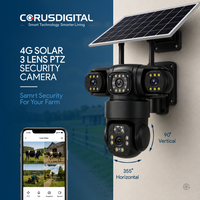
CorusDigital currently lists both 4G cameras and solar-powered camera categories, including 4G solar products.
Can a CCTV Camera Work Without Internet?
This is an important distinction.
WiFi is not the same as internet.
A WiFi camera normally connects to a router, and that router provides internet access.
A 4G camera can bypass the WiFi router by using a cellular SIM connection.
Therefore:
No WiFi router? → Yes, a 4G camera can potentially work.
No internet/mobile network at all? → Remote live viewing through the internet will generally not work.
For remote monitoring, the camera needs a suitable communication path.
How Does a 4G CCTV Camera Work?
The process is relatively straightforward:
Step 1: Insert the SIM
Insert a compatible SIM card with an active data plan.
Step 2: Install the Camera
Mount the camera at an appropriate position.
Step 3: Connect Power
Use the supplied power setup or a compatible solar/battery configuration where supported.
Step 4: Connect to the Mobile Network
The camera connects to the available 4G network.
Step 5: Configure the App
Follow the manufacturer's instructions to connect the camera with the supported mobile application.
Step 6: Start Monitoring
Once configured, you can use the supported app to monitor the camera remotely.
Is a 4G CCTV Camera Good for a Farmhouse?
Yes, it can be an excellent option when the farmhouse does not have reliable WiFi or broadband.
For a farmhouse, consider prioritizing:
-
4G SIM connectivity
-
Outdoor weather resistance
-
Night vision
-
Motion detection
-
Remote mobile access
-
Local storage
-
Reliable power
-
Solar capability if electricity is unavailable
The most important factor remains mobile network availability at the property.
Is a 4G CCTV Camera Good for Construction Sites?
Construction sites are another strong use case.
The location may not have permanent broadband, and infrastructure can change as construction progresses.
A 4G camera can offer more flexibility because the connectivity doesn't depend on a fixed WiFi network.
It can be used to monitor:
-
Construction entrances
-
Building materials
-
Machinery
-
Equipment
-
Parking
-
Site activity
4G CCTV Camera Buying Checklist
Before placing your order, ask these questions:
Connectivity
-
Does it support 4G SIM connectivity?
-
Is my mobile network supported?
-
Is there adequate signal at the installation location?
Camera
-
What is the resolution?
-
Does it support night vision?
-
What is the viewing angle?
-
Does it support motion detection?
Outdoor Installation
-
Is it weather resistant?
-
Can it be mounted securely?
Storage
-
Does it support microSD?
-
Is cloud storage available?
-
Are there additional cloud charges?
Power
-
Is electricity available?
-
Is battery backup required?
-
Is solar support available?
Remote Access
-
Which mobile application does it use?
-
Can I view live footage remotely?
-
Does it support alerts?
Why 4G Cameras Are Becoming More Practical for Remote Security
The main advantage of 4G CCTV is connectivity flexibility.
You don't have to limit surveillance to locations where broadband infrastructure already exists.
For businesses and property owners, this can open up security options for locations that were previously difficult to monitor remotely.
A 4G camera can therefore be a practical alternative when:
WiFi isn't available → Use mobile connectivity.
Broadband installation is difficult → Use a SIM-based camera.
The property is remote → Choose a camera designed for outdoor/remote use.
Electricity is unreliable → Consider a suitable solar-powered solution.
Final Verdict: Is a 4G CCTV Camera Without WiFi Worth It?
If your property has reliable WiFi, a conventional WiFi CCTV camera may be perfectly suitable.
But if you're securing a farmhouse, construction site, agricultural property, warehouse, open plot or remote location without reliable WiFi, a 4G CCTV camera deserves serious consideration.
The most important things to verify are:
4G network coverage + camera compatibility + power availability + storage + outdoor suitability.
CorusDigital offers dedicated surveillance categories including 4G cameras and solar-powered cameras, making it worth exploring the available options based on your installation requirements.
Looking for a CCTV camera without WiFi? Explore the 4G camera options from CorusDigital and choose a solution designed for your location.
3. FAQ Section for SEO
Can a CCTV camera work without WiFi?
Yes. A 4G SIM-based CCTV camera can connect through a mobile network instead of a WiFi router. A suitable SIM/data plan and adequate network coverage are required.
Which CCTV camera is best for areas without WiFi?
A 4G SIM CCTV camera is one of the most practical choices for locations without reliable WiFi, particularly farms, construction sites, warehouses and remote properties.
Does a 4G CCTV camera need a SIM card?
Yes, 4G SIM-based cameras generally require a compatible SIM card with an active mobile data plan.
Can I watch a 4G CCTV camera from my phone?
Compatible 4G cameras can provide remote viewing through their supported mobile application, provided the camera has connectivity and the phone has internet access.
Does a 4G CCTV camera need broadband?
No. A 4G camera can use its SIM/mobile network connection instead of a fixed broadband connection.
Can I use a 4G CCTV camera on a farm?
Yes, provided there is adequate cellular coverage and an appropriate power source at the farm.
Can a 4G CCTV camera work without electricity?
A standard camera requires power. However, some specially designed solar/battery CCTV systems can operate with an independent power setup.